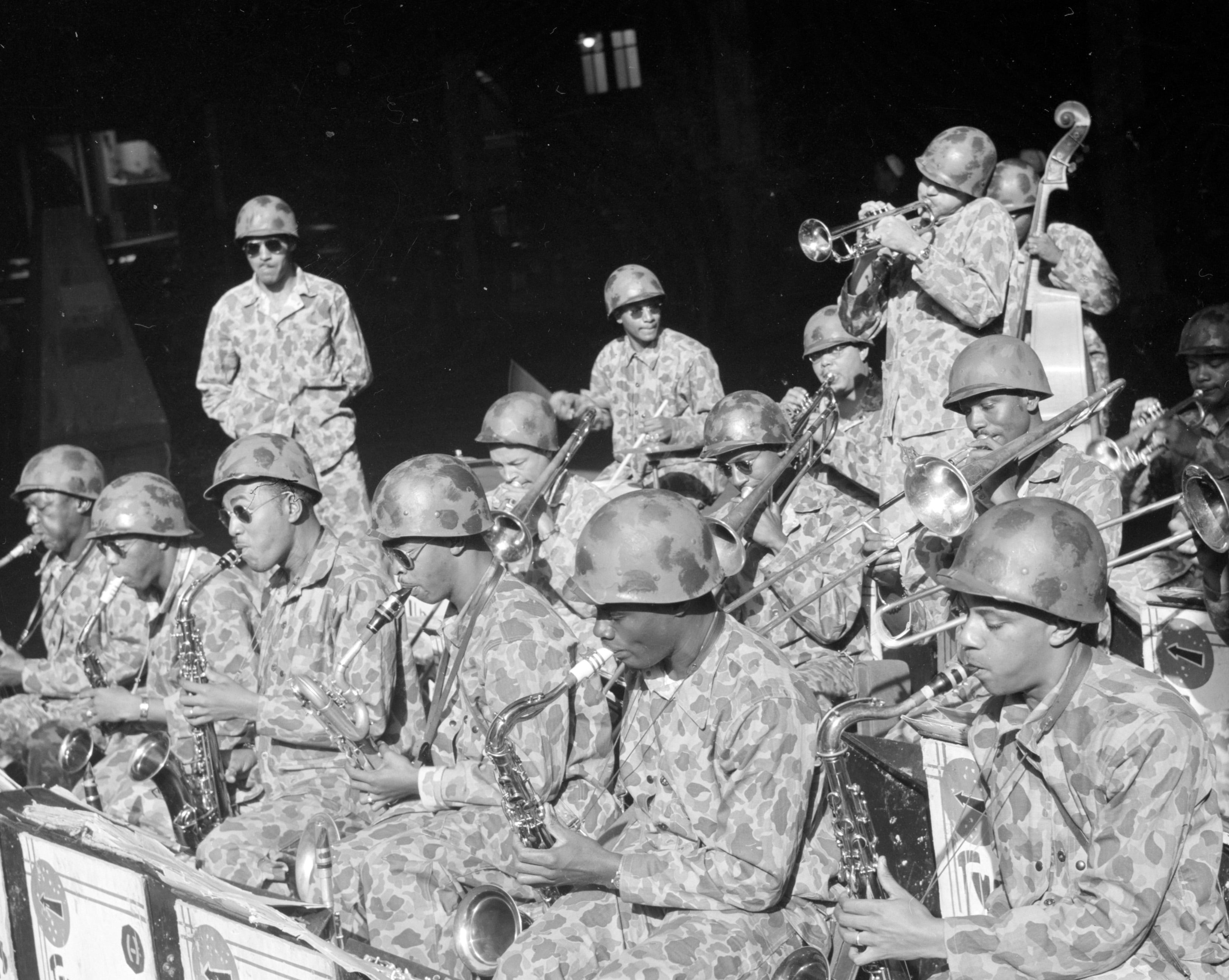
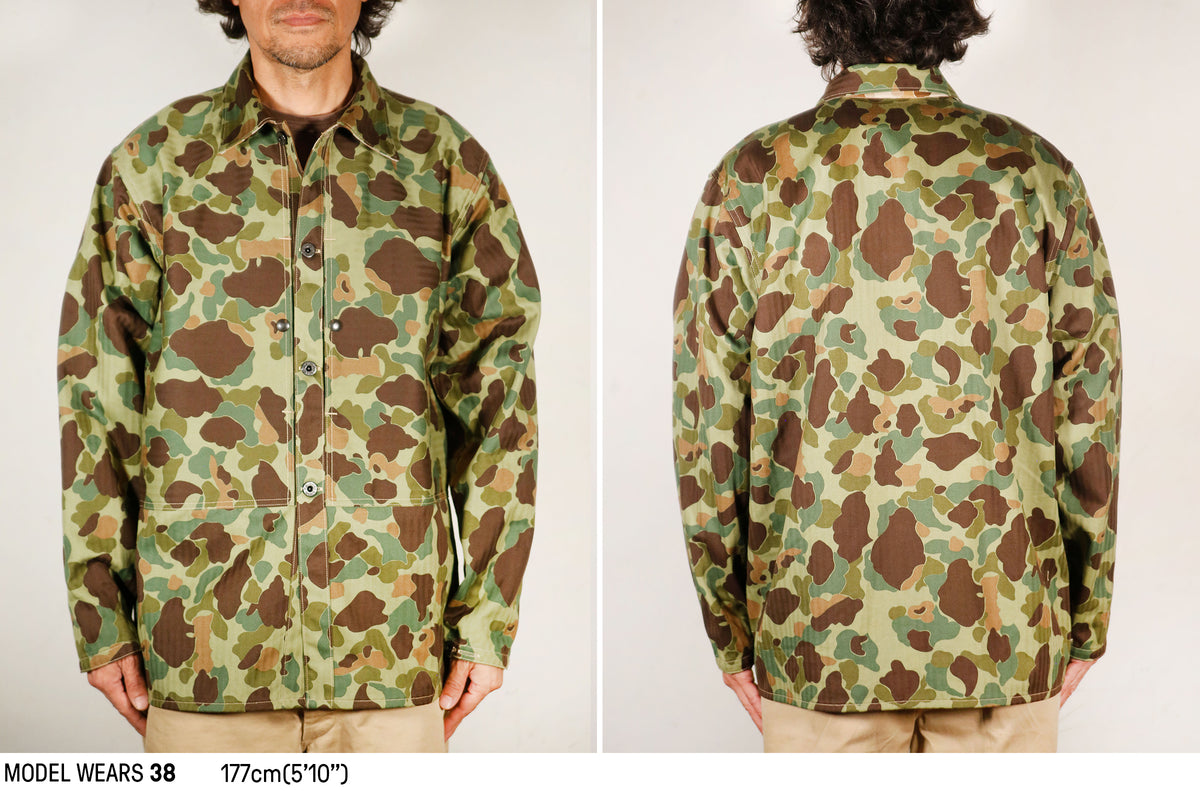
Frogskin camouflage is widely regarded as the first purpose-designed camouflage pattern adopted by the United States military. While the term “frogskin” became common among troops, it was never an official designation. In formal military documentation the pattern was described simply as “camouflage,” largely because no alternative camouflage patterns yet existed.
★ ★ ★
The pattern entered service in 1942 following an urgent request from Douglas MacArthur for a large quantity of jungle combat uniforms. The initial production run consisted of reversible garments printed on white HBT fabric. One side featured a green, multi-tonal pattern intended for jungle environments, while the reverse used lighter tan and brown tones for beach and shoreline operations in the Pacific.
★ ★ ★
The camouflage itself was developed by Norvell Gillespie, a San Francisco-based horticulturalist with a background in botanical observation. Rather than drawing from existing military precedents, Gillespie studied natural concealment, specifically the way amphibians blend into their surroundings. The irregular, organic spotting of a frog’s skin became the conceptual basis for the pattern. When issued to troops, the uniforms were quickly nicknamed “frogskin suits,” a term that endured long after official use ended.
★ ★ ★
Despite its innovative intent, early field feedback was mixed. Marines operating in dense Pacific jungle environments reported that the green side of the pattern appeared too bright and high-contrast to provide effective concealment. The camouflage also saw limited deployment with the Army, including use on the one-piece M-1942 suit in the European theater. There, the pattern’s visual similarity to certain German camouflage designs contributed to several documented friendly-fire incidents. As a result, enthusiasm for the pattern declined during the war years.
★ ★ ★
The Marine Corps continued development based on combat feedback, resulting in the P1942 two-piece uniform, which offered greater practicality and storage capacity. A further refinement followed in the form of the P1944 reversible two-piece uniform. However, by the time the P1944 entered broader circulation, the war in the Pacific had already ended. Camouflage garments were still considered limited-issue equipment, and production numbers for P1944 were comparatively low.
★ ★ ★
Although the wartime lifespan of frogskin camouflage was brief, its postwar influence was substantial. Large quantities of surplus uniforms were released after 1945, and returning servicemen frequently wore them for hunting and outdoor work. Their effectiveness in marsh and woodland settings did not go unnoticed, and commercial manufacturers soon adapted the pattern for civilian use. In this context, frogskin became widely known as “duck hunter camouflage.”
★ ★ ★
- 100% Cotton Herringbone Twill Fabric
- Reversible Printed Camouflage
- Cotton Sewing Thread Construction
- Made in Japan